Tuesday, 31 July 2012

Vietnam 2012

1st Visit to Vietnam


Saigon, Mekong Delta, Vung Tau and Hanoi Tour--- 13 July-19 July 2012 


Halong Bay


Vietnam is shaped like an elongated S strip along the eastern coast of  Indochina Peninsula, facing  South China Sea. It shares common borders with China, Laos and Cambodia.

Vietnam's topography varies from low, flat deltas in the south and north to hilly, mountainous ranges in the central, far-north and north-west.

Mountains and hills cover three quarters of its territory. Located in the north-west, Mt Phan Xi Pang is the highest mountain in Vietnam. It rises to 3143 m.

The two major rivers in Vietnam are the Red River in the north and Mekong River in the south. Red river flows past the Vietnamese capital, Hanoi. Mekong River is also known as Nine Dragons River---a name given to the nine distributaries of the Mekong River.

The most populated areas are Red River Delta and Mekong Delta.

Red River Delta is a major agricultural area of Vietnam. Most of the land is devoted to rice cultivation.

Mekong Delta, as a region, lies immediately to the west of Ho Chi Minh City---the largest city and economic hub of Vietnam. Mekong Delta is famous as a large rice growing area.

Vietnam is the second largest exporter of rice in the world after Thailand.


Vietnam's climate has a great deal difference from south to north. The north has four distinct seasons: spring, summer, autumn and winter. The south is hot, all year round.

The Vietnamese are the majority ethnic group of Vietnam. They are officially known as Kinh (京族) to distinguish them from other ethnic groups.


A Vietnamese pushcart vendor, wearing conical hat


Red River Delta---the Cradle of Vietnamese Civilization


About 2000 years ago, a distinct Vietnamese ethnolinguistic group emerged in the Red River Valley. They began growing rice in the area. They had learned how to irrigate their rice fields by building dykes and digging canals.
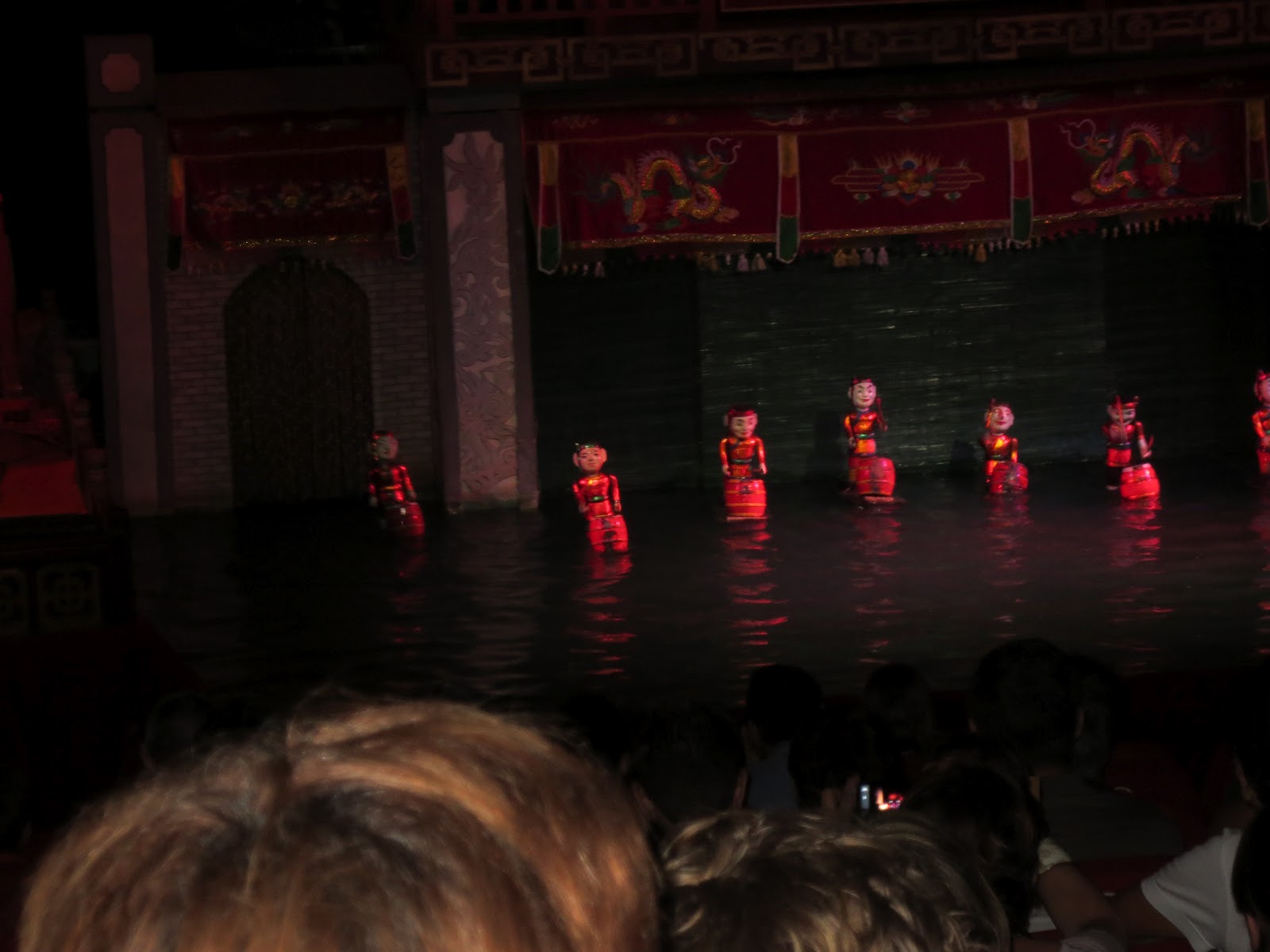


Water Puppet Show

Water Puppet Show originated in the villages of the Red River Delta a thousand years ago. In the show, the puppets dance on water.


Chinese Domination---1100 years of Chinese Domination over northern Vietnam


Vietnamese's history began with the kingdom of Nam Viet (南越国), established in 207 B.C. by a former Chinese general Trien Da ( 赵佗).

Nam Viet covered not only much of southern China but also northern Vietnam.

However, in 111 B.C., China's Han dynasty conquered the area and named it Annam (安南).

The Chinese ruled Vietnam for 1100 years. Due to long period of Chinese domination over northern Vietnam, Chinese civilization had great impact on the Vietnam culture.


Temple of Literature (文庙)

The Temple of Literature is a temple of Confucius in Hanoi. It was built in 1070, dedicated to Confucius. The temple was Vietnam's first national university.


Monarchies---900 Years of Independence between Chinese Domination and French Colonization


It was in 938 A.D. that Ngo Quyen defeated the Chinese and gained independence for Vietnam.

Vietnam was then ruled by a succession of dynasties, including the Ly, Tran, Le and Nguyen dynasties. Under the Le dynasty, the kingdom of Vietnam reached its peak, expanding to the south and conquering  part of the Khmer Empire


One Pillar Pagoda ( 莲花台 ), Hanoi
A Historic Buddhist Temple Built during the Ly Dynasty


The temple is built of wood on a single stone pillar 1.25 m in diameter. It is designed to resemble a lotus blossom, which is a Buddhist symbol of purity.


White Palace in Vung Tau---the Summer Palace of Bao Dai

Bao Dai was the last emperor of the Nguyen dynasty---the last dynasty of Vietnam. Bao Dai abdicated when the communist Viet Minh seized power.


French Colonial Rule and Japanese Occupation


French began its conquest of Indochina in 1859, and by 1885, controlled most of Vietnam. Vietnamese resistance to French rule continued on and off in the decades between the French conquest and the start of WWII. 


St Joseph Cathedral, Hanoi


LienVietPostBank, HCM City


Notre Dame Cathedral, HCM City


Presidential Palace, Hanoi

Presidential Palace was built between 1900-1906 to house the French-General of Indochina.


In 1940, Japan invaded Indochina and defeated the French. A Vietnamese resistance movement led by Ho Chi Minh fought the Japanese.

When Japan surrendered in 1945, Ho Chi Minh declared independence of Vietnam. 

However, French wanted to reoccupy Vietnam.

War (1946-1954) broke out. It was fought between French vs.Viet Minh Forces. 

The war resulted in Vietnamese Communist victory in the Battle of Dien Bien Phu and division of Vietnam into the Communist-ruled North and US-supported South.


Vietnam War (1955-1975)


Vietnam War was one of the major and bloodiest conflicts of the 20th century.

Not long after the 1954 partition, Ho Chi Minh pledged to "liberate" South Vietnam. War soon broke out between North and South Vietnam.

Ho Chi Minh launched a guerrilla war in South Vietnam, led by Viet Cong, with the goal of uniting the country under communist rule.

For fearing that communism would spread through Asia, the US got involved in the civil war by providing military aids as well as sending combat troops into battle in South Vietnam.


War Remnants Museum


Vietnam war continued until 1975, when North Vietnam captured Saigon. The country was reunited the following year and named Socialist Republic of Vietnam. Saigon was  renamed Ho Chi Minh City, in memory of Ho Chi Minh---the founding father of Vietnam. Ho Chi Minh died in 1969, six years before the Fall of Saigon.


The number of casualties---civilians and the military---was enormous during Vietnam War.

The end of Vietnam War prompted millions to flee the country, escaping from the communist. They were accepted by other countries as refugees.

During the Vietnam War, the US sprayed Agent Orange across some parts of Vietnam. Agent Orange is a kind of poisonous chemical designed to defoliate the dense jungles. Their goal was to deprive the guerrillas of food and cover. 

Effects of toxic Agent Orange continue to haunt Vietnamese until today. Many of them have suffered from exposure to Agent Orange. 

According to Vietnam Ministry of Foreign Affairs, 4.8 million people were exposed to Agent Orange, resulting in  400 000 people being killed, or maimed and 500 000 children born with birth defects.  

To the victims of Vietnam War, the war never ends.


Saigon


had a nice bowl of pho bo at this restaurant


Saigon River Dinner Cruise


enjoying Fanny icecream


 Mekong Delta Tour


travelling by rowing boat along secluded canals to tropical fruit orchards


sampling local delicacy


Vung Tau


Vung Tau, located east of Ho Chi Minh City, is a beach resort.


Vung Tau


Guan Yin Temple ( 观音庙 ), Vung Tau 


Jesus Monument Mountain


Hanoi


Ho Chi Minh Mausoleum


Ho Chi Minh's Stilt House 


Ho Chi Minh Museum


Visiting 36 Old Quarters in Hanoi by Tramcar

The Old Quarters has been well-preserved. It is home to 36 old streets in Hanoi. The street names nowadays still reflect their specializations.


Halong Bay


Halong Bay, a UNESCO World Heritage Site, is located in northern Vietnam, east of Hanoi. 

The bay is famous for its scenic ocean karst topography. It features over 3000 islands, rising spectacularly from the ocean. Several of the islands are hollow with enormous caves.


The Kissing Rocks, Halong Bay


a floating fishing village


serene beauty of Halong Bay
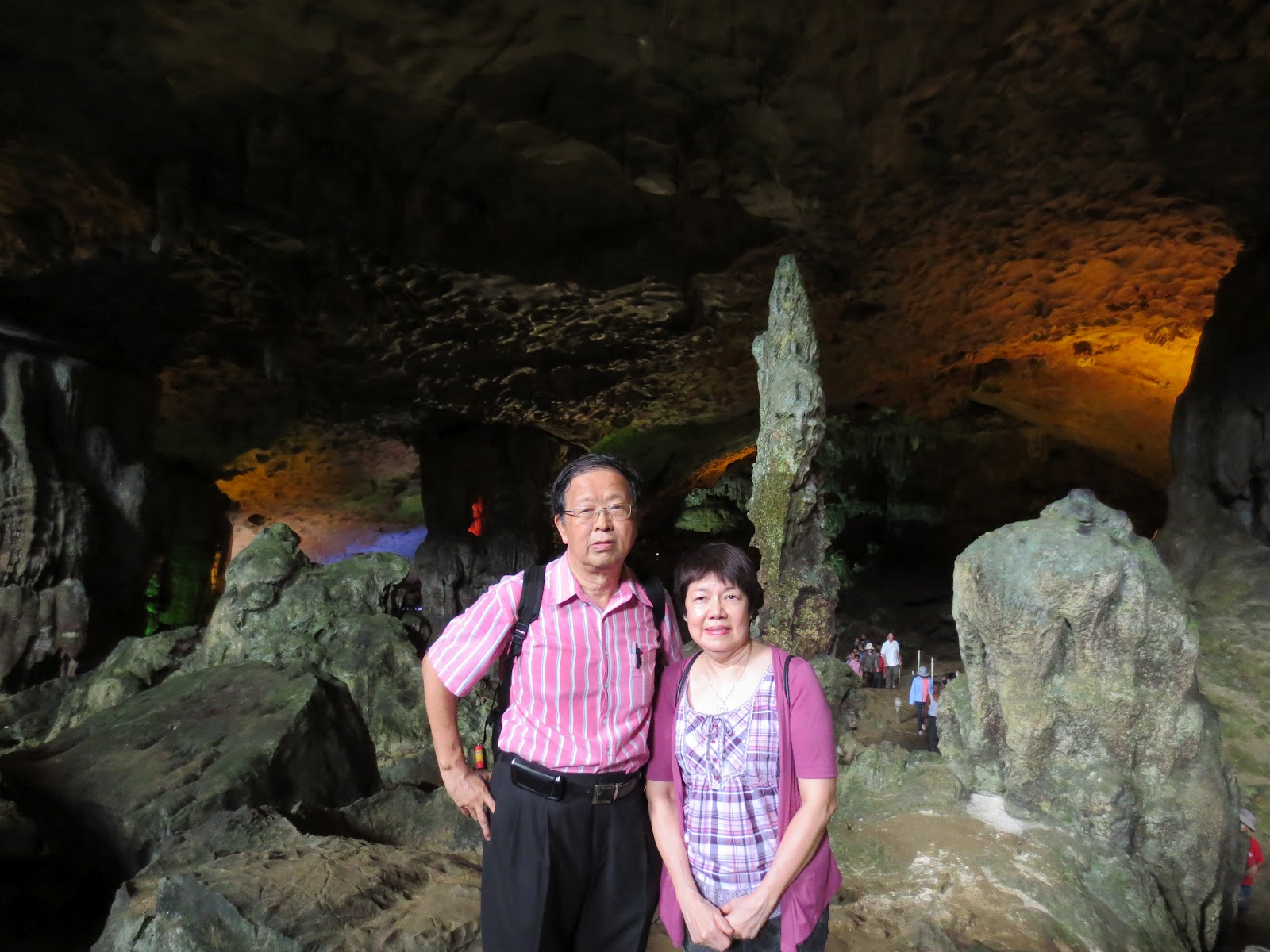


a cavern of brilliant stalactite and stalagmite formations


Wednesday, 30 November 2011

Danxiashan/Guangdong---Nov 19-25, 2011

8th Visit to China


广东省---华侨之乡


 Guangzhou (广州)


Guangzhou (广州)


珠江---广东的母亲河


Pearl River (珠江) at night, in Guangzhou


The three major rivers of the Pearl River system are the Xijiang ( 西江), Beijiang (北 江) and Dongjiang (东江) Rivers.

The three rivers converge in Pearl River Delta and flow into South China Sea. The lower course of the Xijiang beyond the confluence is called Pearl River, famed as the river that flows through Guangzhou.


Cruise Ship


The Pearl River is the third largest river in China. It drains majority of South Central Guangdong and Guangxi as well as parts of Yunnan, Guizhou, Hunan and Jiangxi provinces in China.

The Pearl River Delta is one of the economic hubs of China.


on board a cruise ride on Pearl River at night


Shenzhen (深圳)---the Window of China's Reform and Opening Up to the World


Shenzhen lies along the coast of the South China Sea
and immediately north of Hong Kong.

Its rapid development could be traced back to 1978, when Deng Xiaoping (邓小平) selected this small fishing port as China's first Special Economic Zone (经济特区). 

As China's first SEZ, Shenzhen has always been regarded as the window of China's Reform and Opening Up (改革开放) to the world.

The city itself is a concrete jungle. If you are looking for traditional China, you will certainly not find it here.


Overseas Chinese Town East (东部华侨城)

OCTE is a resort that integrates the cultures of both East and West.


Zhuhai (珠海)


Statue of Fishing Lady (珠海渔女)


Zhuhai is one of the Special Economic Zones (经济特区) established in the 1980s. Before that it was a group of fishing villages.

Zhuhai serves as the gateway to Macau just like Shenzhen to Hong Kong.

Zhuhai has over 100 of islands. The city is known for its beautiful coastline.


Kaiping (开平---碉楼之乡)

Kaiping City is famous for its diaolou built by overseas Chinese in a blend of Chinese and Western architectural styles.

Diaolou are multi-storey, defensive village houses built against the attacks of bandits.

Today there are still over a thousand of diaolou standing in Kaiping. Most of them were built between 1920s to 1930s.

Kaiping Diaolou and Villages (开平碉楼与村落) was designated as a World Heritage Site by UNESCO.


Majianglong Diaolou Cluster (马降龙雕楼群)


Due to poverty and social unrest in Kaiping during the late 19th century---the same period as California gold rush. Many people emigrated to the US. They worked as labourers particularly in the California gold fields. Some also worked on the transcontinental railroads construction.

However, they had to live under unfair regulations in the US.

Some of them returned to their hometown after accumulating some savings. They used their hard-earned savings to build a house, buy fields and get married.


'金山伯' '金山伯', 没有一千也有八百

一个华侨的脚印就有三个土匪追踪

Meanwhile, it had become known in Kaiping that some of the returning overseas Chinese were wealthy. They had since become the targets of bandits in Kaiping. To defend themselves against the attacks of bandits, they built diaolou used as  house-cum-watchtower and also for flood protection. 


Li Garden (立园)

The statue of its master, Xie Weili (谢维立)---a Chinese emigrant to the US, in front of Li Garden
 

老华侨的传统思想--- 落叶归根, 衣锦还乡, 光宗耀祖


Old overseas Chinese were sentimentally attached to their motherland even though they had lived overseas for many years. They had the tradition of returning to their hometown with position and wealth. Some of them built mansions in their hometown to show off their wealth.


Li Garden (立园)


Li Garden is a private garden constructed in the early 20th century. The construction of Li Garden blended the Chinese and Western architectural style at the time, and traditional Chinese landscaping with the features of canals, fine bridges, pavillions and watchtowers.


Shaoguan (韶关)


Shaoguan City is located in the northern part of Guangdong province. Formerly, the city was an important trade route from Central China to Guangzhou.


Mt Danxia


Mount Danxia is a famous scenic area near Shaoguan city. The region is formed from reddish sandstone which has been eroded over time into spectacular steep cliffs and unusuall rock formations.


丹霞山阳元石


Nan Hua Temple (南化寺---南宗禅法发源地)


Nan Hua Temple (南华寺) is a Buddhist Monastry of the Zen, where Hui Neng (慧能) once lived and taught. The temple is located near Shaoguan City

Hui Neng (638-713), the sixth Patriarch of the Zen (禅宗六祖), is considered as the founder of the Southern Sect of Zen (禅宗南宗).

After Huineng had passed away, his body was mummified. His mummified body has since remained seated and open to public in Nan Hua Temple.


The temple has a history of more than 1500 years. It was founded in 502 by an Indian Monk named Zhiyao Sanzang (智药三藏) who originally named the site Baolin Temple (宝林寺).


南华寺菩提树


菩提本无树 明镜亦非台
本来无一物 何处惹尘埃
                                                                         ------摘自六祖坛经


Macau (澳门)---the Gambling Capital of Asia

Ruins of St. Paul's (大三巴牌坊)

The Ruins of St. Paul's is the most famous landmark of Macau. All that is left of the imposing 16th century cathedral is its front facade. The Ruins of St. Paul's is not the ruins of a St. Paul's church, but rather the Church of Mater Dei.


In the background, Grand Lisboa (新葡京酒店) dominates the skyline of Macau,


Macau is, along with Hong Kong, one of the two Special Administrative Regions (特别行政区) of the People's Republic of China.

It lies on the western side of the Pearl River Delta, bordering Guangdong province to the north.

The territory's economy is heavily dependent on gambling and tourism.


议事亭前地喷水池

Macau was settled by fishing people long before the arrival of foreign traders.

It was a Portuguese colony and both the first and last European colony in China.

Portuguese traders first settled in Macau in the 16th century and subsequently administered the region until the handover on 20 Dec 1999.

It is now administered under the policy of "one country, two systems".


Historic Centre of Macau (澳门历史城区)

Historic Centre of Macau was designated as a World Heritage Site.

It is a collection of over twenty locations that witnessed the unique assimilation and coexistence of Chinese and Portugeuse culture in Macau.


Matsu Temple

  Built in the 15th century, the temple was dedicated to Matsu---the goddess of seafarers and fishermen.


Guia Fort (松山炮台) on Guia Hill


Church of Our Lady of Guia and Lighthouse on Guia Hill

It was the oldest lighthouse in South China Sea.


天行健君子自强不息